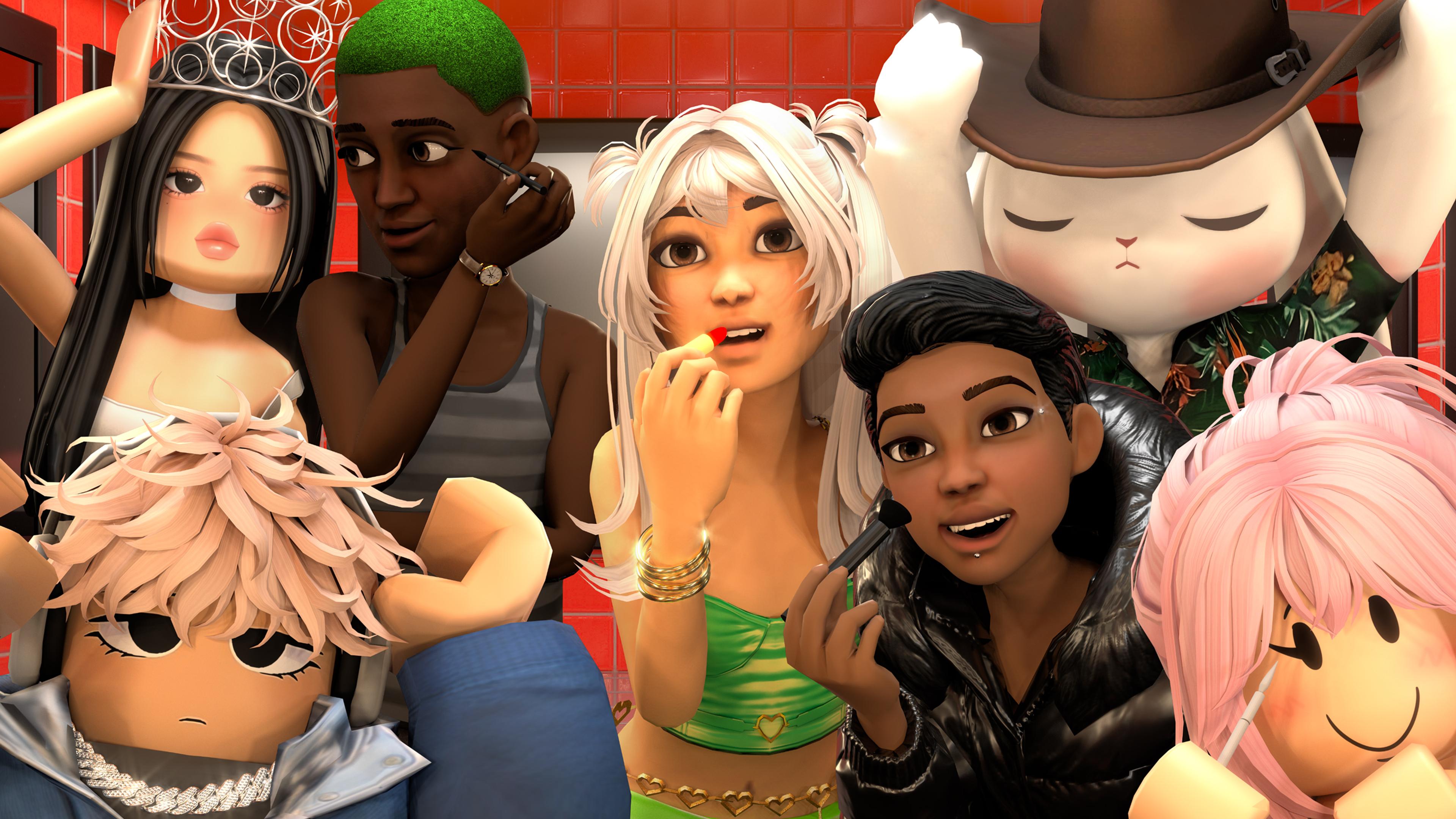
Roblox is the world’s largest gaming platform for children. More than 110 million people log in each day, most of them under 18, with roughly one-third under 13. Dress to Impress is a game on Roblox that has been visited more than 9 billion times, despite not ranking among the platform’s most-played titles. In each round of the game, players enter a shared lobby, receive a theme, and are given five minutes to assemble a look for their avatar. Then, they walk a runway while other players rate their looks on a five-star scale.
In 2024, Dress to Impress unexpectedly broke out of its tween demographic and exploded in popularity because of an in-game collaboration with singer Charli XCX. The game’s creator, known online as Gigi, began developing it at age 14; by 17, she was running a studio and shaping how millions of players thought about fashion.
I was first introduced to Dress to Impress by my teenage sister, and encountered it again through my work as a philosophy teaching assistant for high-school students. When I tried out the game for myself, I was impressed by its thematic range, including subcultural styles like Japanese gyaru and cybergoth. I watched young players role-play, half-ironically, as homeless women holding babies and panhandling outside the game’s coveted VIP room. Access to the room costs roughly $10 USD, and considerably more in countries with unfavourable exchange rates. ‘Brokie, just buy it,’ one player jeered. ‘Ten bucks is nothing.’
Roblox burgeoned during the COVID-19 pandemic; many of my students told me that their most cherished remote-learning memories were actually ditching Zoom classes to play Roblox together.
Roblox users are not only consumers but also producers. Some users create content such as avatars and accessories, while others develop games for the platform. Both content creators and game developers can earn Robux, Roblox’s proprietary currency, but they must go through the company’s Developer Exchange program to convert those earnings into real money (if they qualify, which many don’t). Because Roblox unilaterally sets the conversion rate and eligibility requirements, creators and developers are locked into a closed economy where their labour is compensated on the platform’s terms alone. As a result, many creators and developers lament that months or years of work feel like unpaid labour, although a small number manage to turn their success into a career, like Gigi.
Welcome to Bloxburg
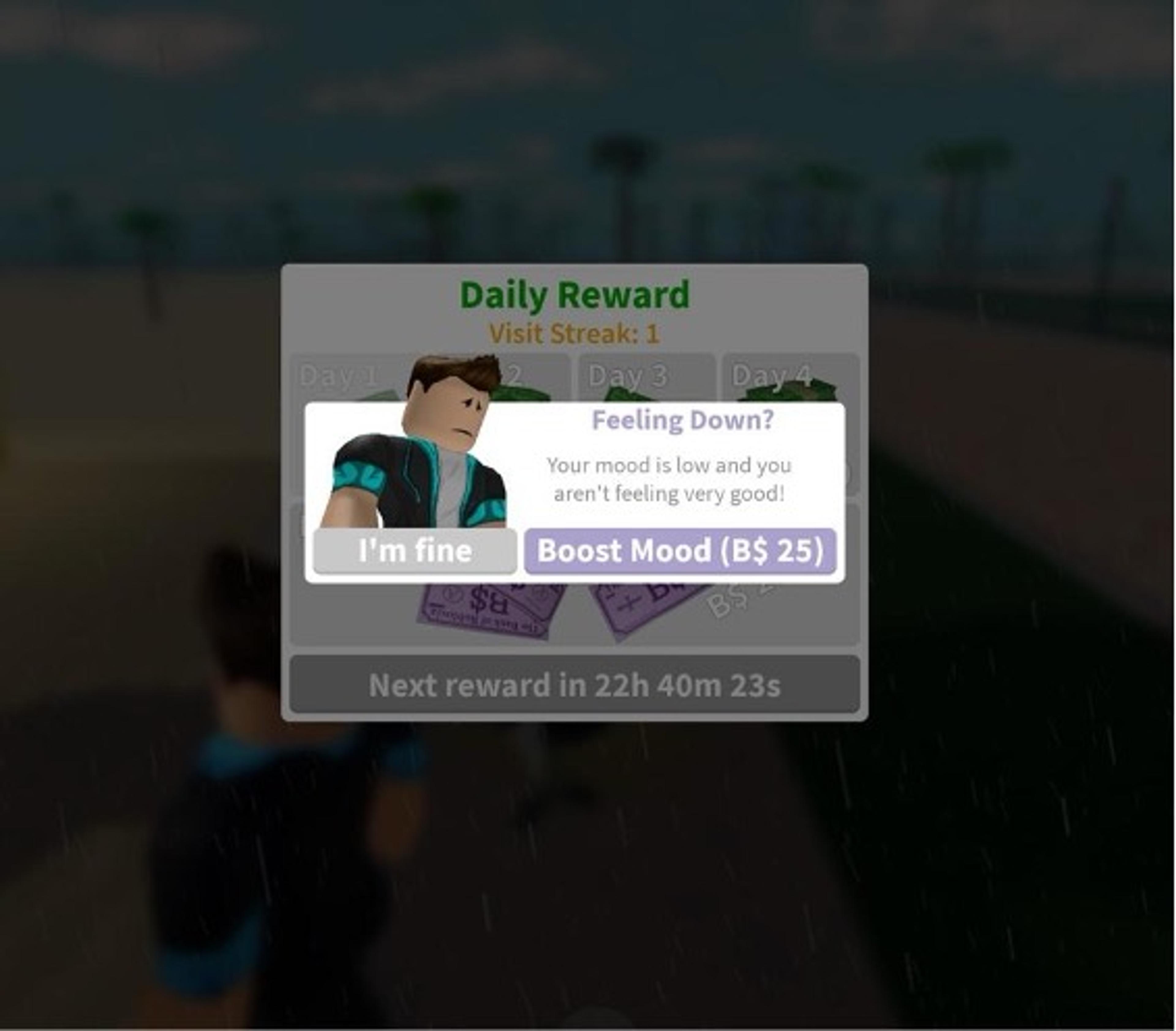
Welcome to Bloxburg is another popular Roblox game; it is inspired by The Sims, a long-running life-simulation game franchise where players manage characters’ homes, jobs and daily needs. In Bloxburg, players punch in to work, commute across town, pay bills, and struggle to keep hunger meters from draining. After logging in, a message greets them: ‘Good morning. It’s a new day, which means it’s time for work.’ Wages earned in-game pay for food, housing and transportation; highways are lined with billboards advertising fictional brands like ‘Blox Burger’. Wage labour becomes not a means to an end, but the end itself in the gameplay.
On TikTok, teens joke about the game’s realism: ‘Preparing for the real world’
Brookhaven, which has been visited more than 70 billion times, is a game where players can choose to inhabit roles like police officers, monitoring other players through CCTV systems. Others occupy law offices, modelling agencies, nightclubs, or private homes. Some players show off their large houses and luxury cars.
Oath of Office
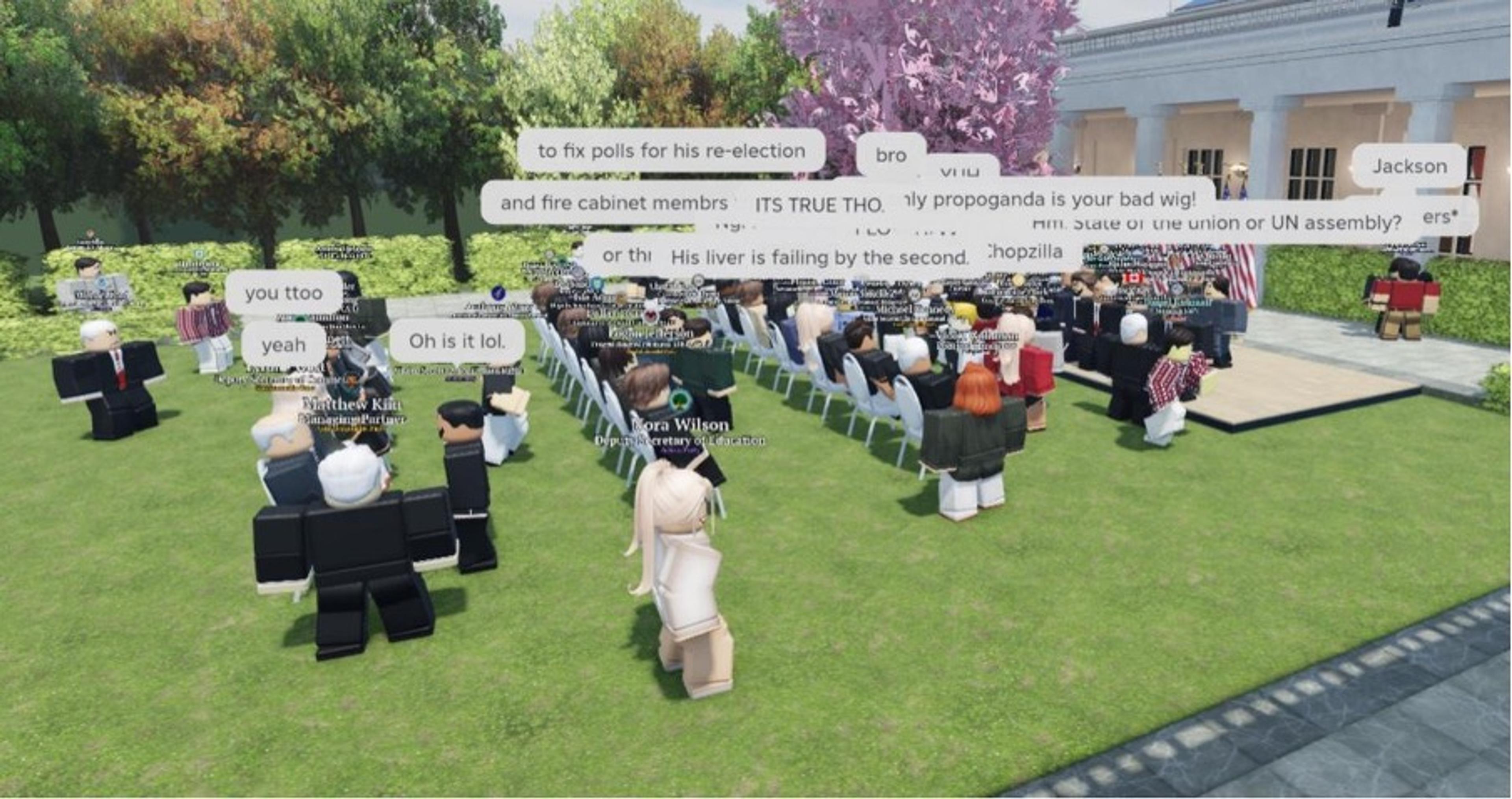
In Oath of Office, a political simulator, players select roles ranging from senator to journalist to military commander. Daily log-ins provide rewards, and paid expansion packs unlock additional branches of the government. On TikTok, teens joke about the game’s realism, noting that in-game sexual harassment and racism are commonplace. ‘Preparing for the real world,’ one young commenter quipped.
Roblox’s top games exemplify Guy Debord’s argument in The Society of the Spectacle (1967) that under capitalism, social relations are mediated by images rather than direct experience. In Dress to Impress, winning depends on deploying high-status items and aligning them with current memes and cultural references. Fashion becomes a way of reproducing the spectacle: what matters is not personal expression, but how convincingly one signals status through images.
Jean Baudrillard’s theories of simulacra and hyperreality extend this point. In Brookhaven, named after a real town in Georgia, players encounter simulacra: places that resemble real-world locations without meaningfully referring back to them. ‘Starbrooks’ sits across from grocery stores selling Coca-Cola, alongside simple renderings of police stations, offices and suburban homes. These elements function as familiar symbols whose meaning no longer depends on any original reality. In this hyperreal setting, things feel meaningful simply because they look familiar, not because they connect to anything outside the game.
Brookhaven
In the 2000s, children decorated igloos to show off to their friends in the original Club Penguin and (I was guilty of this one) staged melodramas with stuffed animals on YouTube. But these earlier platforms capped player costs to a few dollars and funnelled everyone through the same limited-time, adult-designed events (like Frozen or Marvel takeovers) where experiences were the same for all players. Roblox is unprecedented in scale and structure, and through play it habituates children to capitalism by normalising paywalls, status purchases, artificial scarcity, and unequal access under the guise of creative freedom.
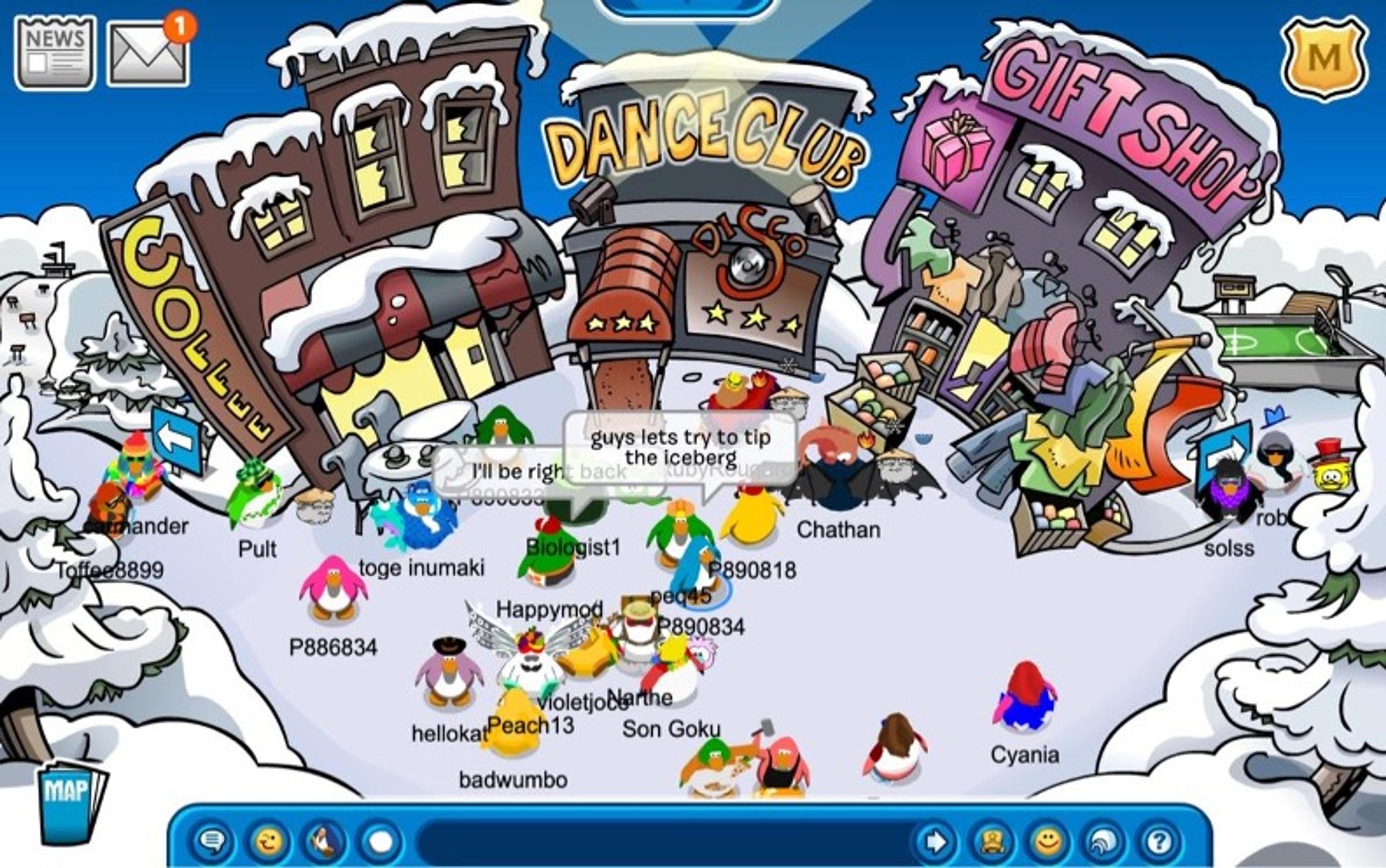
Club Penguin
These games turn ordinary systems – schools, suburbs, domestic interiors – into sites of fear
Scam experiences, or cloned versions of popular games that trick unsuspecting children into spending Robux, thrive on the platform. They mirror real-world market asymmetries; children learn early that participation in digital economies entails exposure to fraud, and that safety is never guaranteed.
Horror, too, is prevalent on Roblox. For many players, Roblox is their first encounter with online frights, recalling an older generation’s exposure to creepypasta, internet-born horror legends like Slender Man. Popular Roblox horror titles lure players in with familiar environments such as schools and homes before abruptly shifting into analogue horror scenes. These games turn ordinary systems, including schools, suburbs and domestic interiors, into sites of fear.
The philosopher of art Noël Carroll asked why we are drawn to horror, even though it is designed to disgust and disturb us. This ‘paradox of horror’ is especially visible on Roblox, where children actively seek out experiences that both entertain and unsettle them. The paradox is intensified by the platform’s structure. Players are encouraged to pay for the very mechanisms that frighten or disempower them, turning fear itself into a commodity, something to be bought and sold. And, yes, players can pay Robux to jumpscare other players.
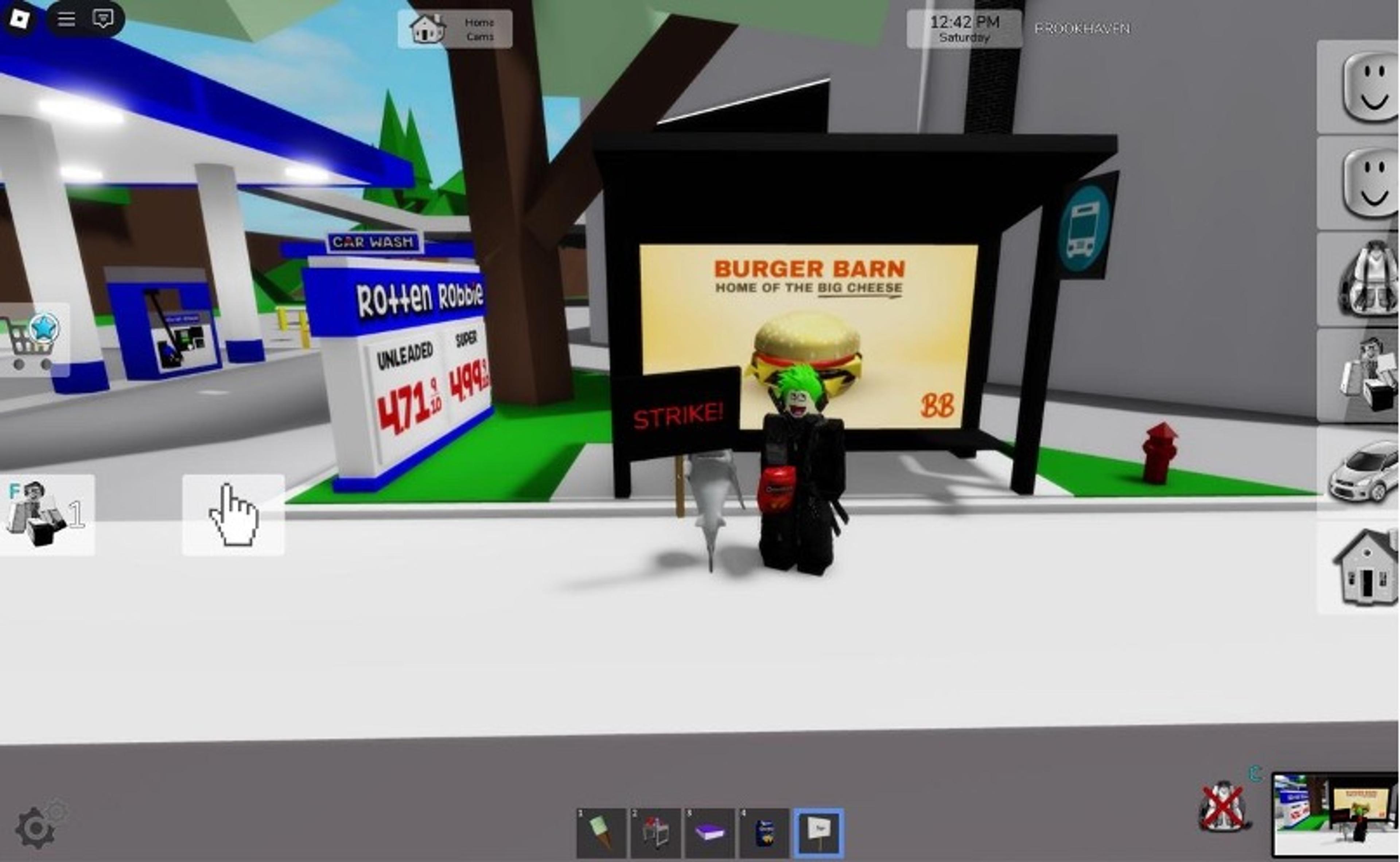
At the same time, Roblox has become a viral site for political activism. I’ve watched players pick up cardboard signs from the gas station in Brookhaven, editing them to protest Medicaid cuts and ICE raids, depending on what was in the headlines most recently. The real and the performative coexist, just as in their newsfeeds. Yet political expression does not interrupt Roblox’s economy; instead, it generates content for it.
Roblox’s cultural influence extends beyond its own platform. Its games, avatars, stories and in-jokes circulate widely on TikTok and other social media. Players livestream competitions in Dress to Impress, post avatar edits set to trending audios, and create machinima (short films) that parody popular culture. Here, the media theorist Henry Jenkins’s concept of convergence culture is apt. Roblox is not just a gaming platform but a beneficiary of convergence culture, gaining value from player-made content that is remixed and circulated across platforms; a TikTok video of the Brookhaven ICE protest reached far more viewers than the protest ever did within the game.
Roblox resists hasty moral appraisal. It is a space of creativity and parody, scams and horror, cultural production and extractive monetisation, and children are drawn to the ambivalence. These contradictions follow from the platform’s economic structure. Roblox invites children to create, perform, socialise and even protest, while retaining control over how attention and labour are converted into profit. Through play, young users become familiar with the tenets of global capitalism, where inequality is a feature, not a bug.
If Roblox offers a glimpse into the metaverse’s future, it suggests what may follow as existing surveillance systems become more intimate. Platforms already monitor users’ activity and preferences and may find ultimate value in extracting biometric data. The same children role-playing as CEOs, senators and panhandlers could soon be engaging in settings where faces, voices, heartrates or even gaze patterns are tracked and commodified.
The European Union has begun to legislate protections for minors’ data; Australia has banned under-16s from using social media apps. Whether other countries follow will shape whether future generations can play online at all without becoming conditioned early on to the economic, political and philosophical systems in place. In Roblox, players learn how capitalism works, how it can be parodied, and even how it might be subverted… all while the platform cashes in on the joke.